


The Alzheimer’s Association International Conference (AAIC) remains the world’s premier forum for Alzheimer’s and related diseases research, bringing together scientists, clinicians, entrepreneurs, investors, and advocates from around the globe. This year’s conference in London highlighted an inflection point for the field: innovations that have been in development for years are rapidly moving from the research lab into clinical practice.
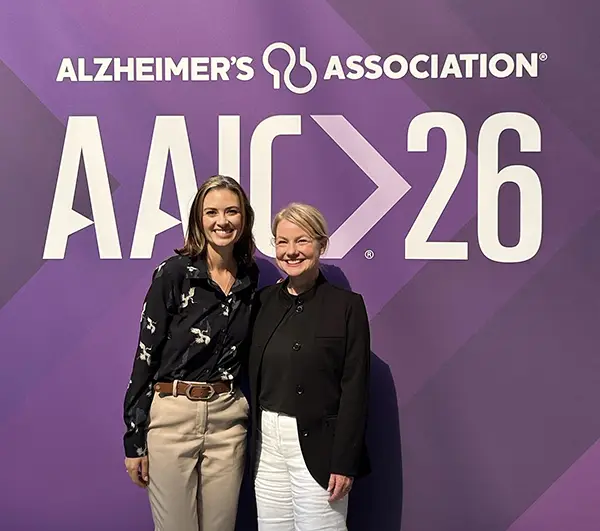
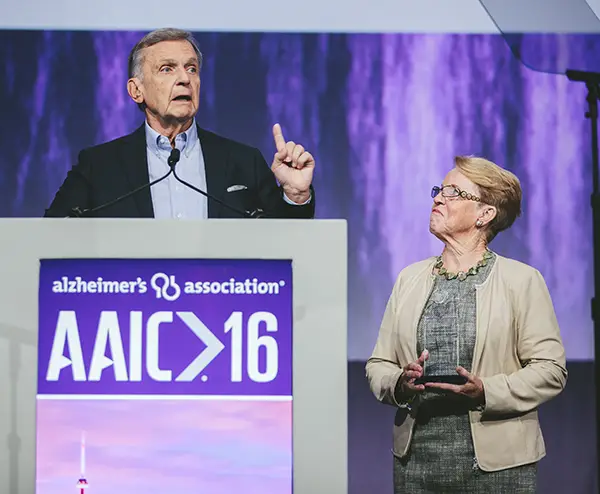
Jerre and Mary Joy Stead have been committed to finding a cure for Alzheimer’s since the early 1990s, and this year’s AAIC stood out as the most exciting on record—reflecting a long history on unwavering support. The Steads helped establish Alzheimer’s Association chapters across the country and served on the national board of directors, advanced policy through the Alzheimer’s Impact Movement, supported the founding of Banner Alzheimer’s Institute, founded ALZpath to further Alzheimer’s diagnosis, supported breakthrough therapeutic company Spinogenix, and received the Jerome H. Stone Philanthropy Award for Alzheimer’s Research at AAIC in 2016.
Across this year’s AAIC scientific presentations and industry discussions, one consistent message emerged: earlier detection and more effective therapies are bringing us closer to changing the trajectory of Alzheimer’s disease.
Earlier Detection Is Transforming Alzheimer’s Care
One of the conference’s defining themes was the rapid advancement of blood-based biomarkers as practical tools for earlier, more accessible diagnosis. Researchers presented new evidence demonstrating that plasma biomarkers can help identify Alzheimer’s disease years before significant symptoms emerge, opening the door to earlier intervention and improved patient outcomes.
Banner Alzheimer’s Institute (BAI) was at the forefront of these discussions. Dr. Nicholas Ashton, Senior Director of Banner’s Fluid Biomarker Program, was a featured speaker in a symposium exploring how pTau217 blood testing is helping make Alzheimer’s diagnosis more scalable and accessible in routine clinical practice. Dr. Ashton, BAI Co-founder Dr. Eric Reiman, and collaborators have set the stage for the use of population-based studies to inform a person’s risk for progression to cognitive impairment over one-10 years based on a person’s pTau217 blood testing, genetic risk, age, and other factors. This informs a person’s lifestyle options and future preventative drug treatment.
In a major presentation and associated paper in the Journal of the American Medical Association (JAMA), Rachel Buckley and colleagues, including ALZpath Advisory Board member Sterling Johnson, showed the potential for plasma pTau levels to estimate a cognitively unimpaired person’s 2-, 5-and 10-year risk of progression to cognitive impairment. Those with “very high” pTau217 levels had an estimated 78% risk of developing cognitive impairment within 10 years.
That scientific momentum was reflected throughout the conference. Stead Impact Ventures portfolio company ALZpath announced that its proprietary pTau217 antibody served as the foundation for 86 scientific presentations from 56 academic, clinical, and industry organizations. The breadth of research showcased the expanding adoption of ALZpath’s technology across the translational pipeline—from biomarker discovery and clinical validation to diagnostic development and implementation—underscoring the growing confidence in blood-based testing as a cornerstone of Alzheimer’s care.
Therapeutic Innovation Continues to Advance
AAIC also highlighted encouraging progress in therapies designed to slow, or even reverse, the progression of Alzheimer’s disease.
Stead Impact Ventures portfolio company Spinogenix contributed to this momentum by reporting positive long-term clinical data for its drug, tazbentetol, in Alzheimer’s patients continuing treatment for up to 84 weeks. The findings add to the growing body of evidence supporting Spinogenix’s approach to synaptic regeneration as a novel therapeutic and reinforces the company’s mission to restore function in neurodegenerative and neuropsychiatric disease.
What We’re Watching
- Blood biomarkers are becoming standard clinical tools, not just research instruments. See Neurology Live interview at AAIC with ALZpath Advisory Board Member Jeffrey L. Dage, PhD.
- The focus is shifting to earlier intervention, with diagnosis years before symptoms becoming increasingly feasible.
- Longer-term therapeutic data are beginning to validate new approaches, giving the field greater confidence in disease-modifying treatments.
Advancing Innovation Through Collaboration
For Stead Impact Ventures and Foundation, AAIC 2026 reinforced a belief that has guided our work from the beginning: meaningful progress against Alzheimer’s disease requires collaboration across the entire innovation ecosystem.
As these advances move from research into clinical practice, we remain committed to investing in and supporting innovators who are improving healthspan and creating a future where neurodegenerative diseases can be detected earlier, treated more effectively, and ultimately prevented.